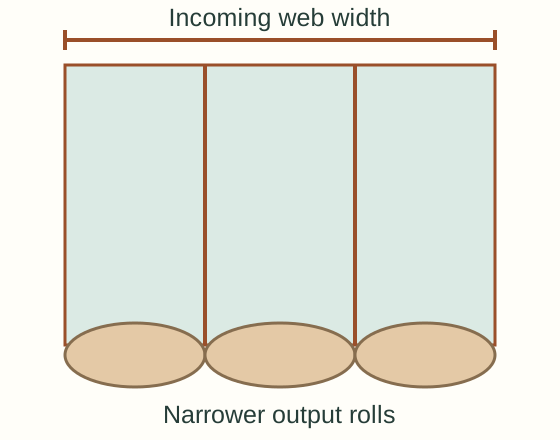
Specify slitting and rewinding with the actual web structure, supplied roll and required output roll. Slitting divides the width of a moving web; rewinding builds the resulting material onto rolls. Neither operation, by itself, creates the folds and closure of a finished insulated liner.
This guide covers the roll stage in liner converting. It provides an input sheet and defect-trace table, without assuming that a slitter suitable for one nonwoven can run a reflective bubble laminate.
Start with the roll and the web
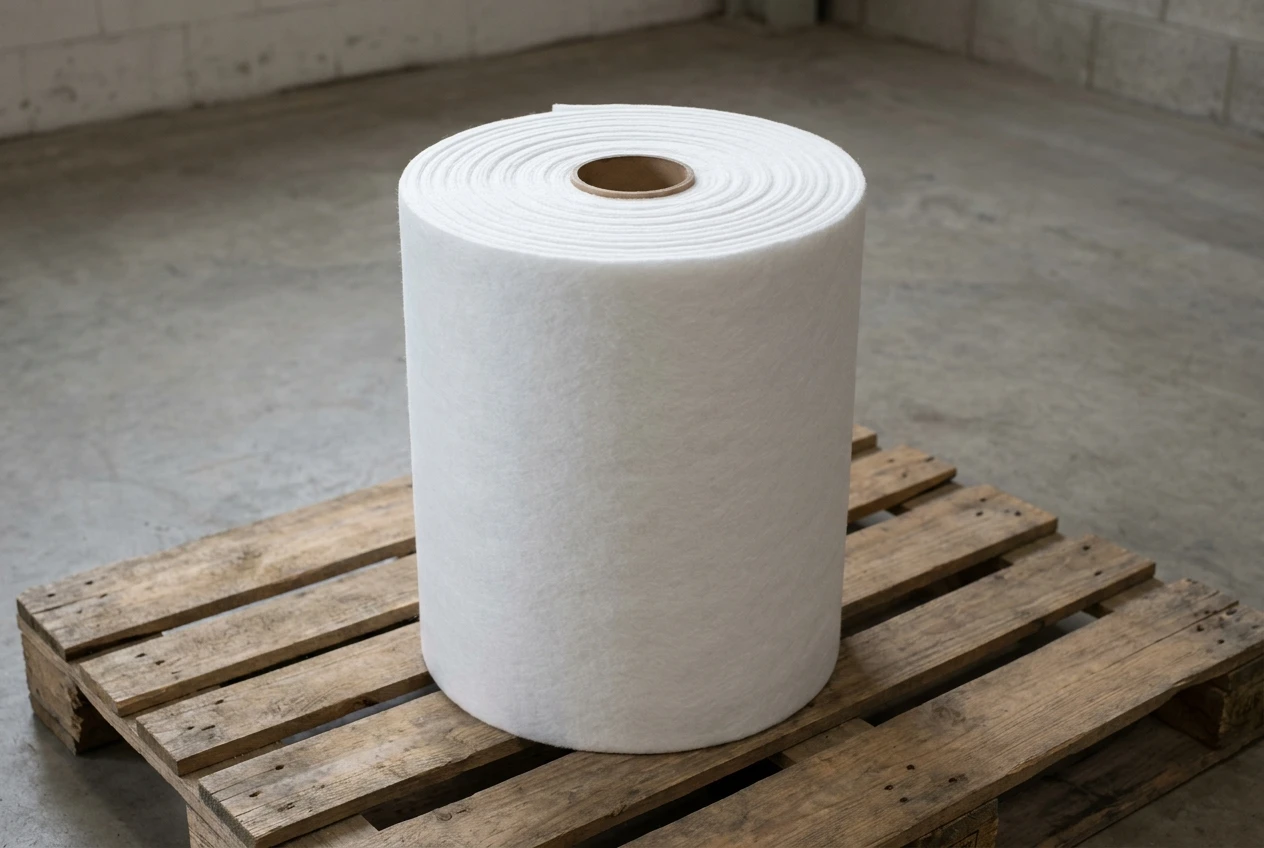
Record the material supplier reference, layer construction, width, thickness measurement method and machine-direction orientation. Identify whether a layer compresses, stretches, sheds fibers or separates under handling. Use the supplier’s data and sample evaluation to establish those properties; an image of the roll is insufficient.
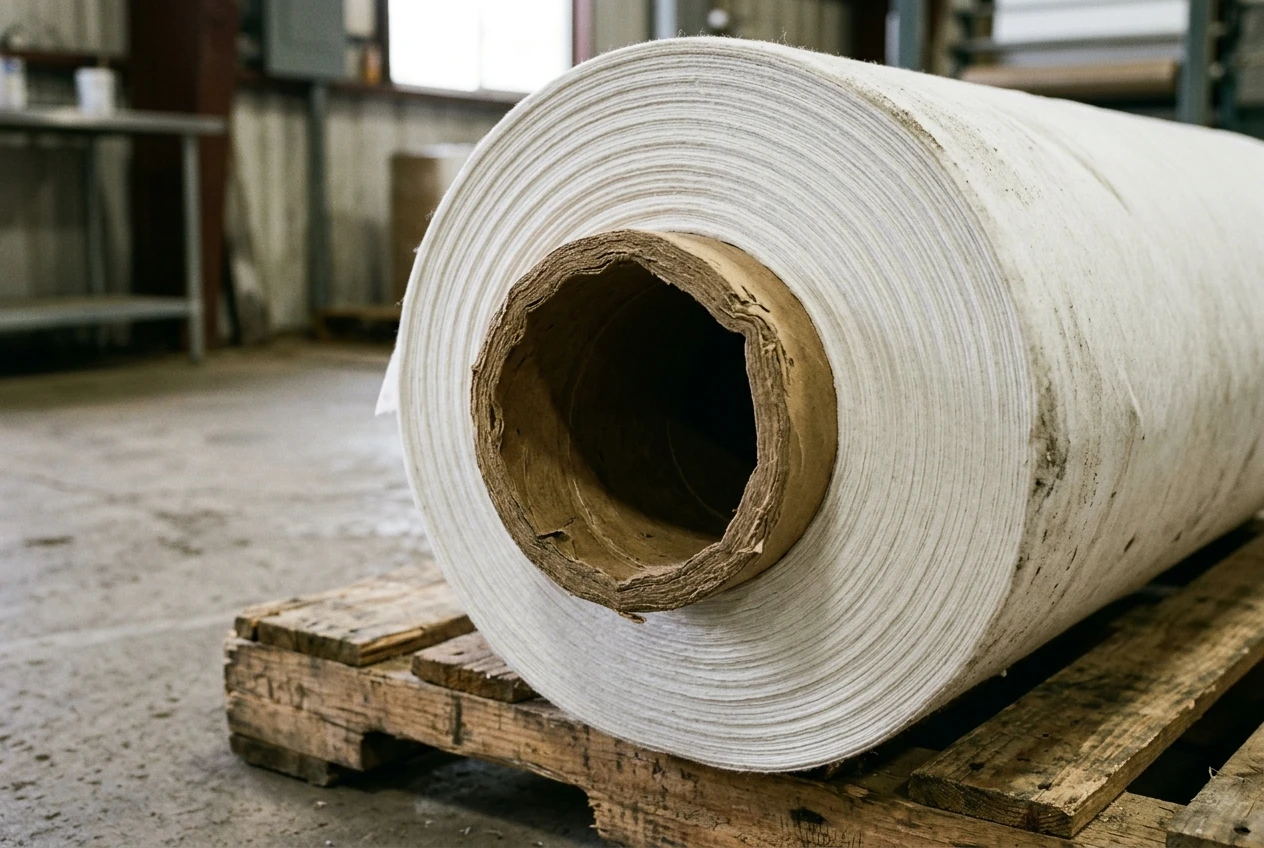
The roll edge and core are useful inspection locations. Uneven winding, edge damage or a deformed core can affect downstream handling even when the material description is correct. Record the incoming condition before threading the machine under its approved procedure.
Complete the input sheet
| Input group | Information to supply | Why it affects evaluation |
|---|---|---|
| Substrate | Material reference, layers, orientation and representative sample | Establishes what the knives, guides and rollers contact |
| Mother roll | Web width, roll diameter and mass, core and winding direction | Defines handling and unwind requirements |
| Slit pattern | Required widths, count, trim and tolerance from the product drawing | Defines the width-conversion task |
| Finished roll | Core, diameter or length, winding direction and identification | Connects output to the next operation |
| Material behavior | Compression, stretch, coating sensitivity and edge condition | Helps select a trial setup without guessing a tension value |
| Downstream use | Cross-cutting, forming or other feed requirements | Defines how roll quality will be judged in use |
| Acceptance | Width method, edge inspection and winding checks | Makes the trial result reproducible |
CAMPEN describes substrate-specific slitting and controlled web handling. Calemard also emphasizes regular winding tension for downstream processing. Those documents support asking about the winding system and material response. Their catalog capabilities do not establish settings for your particular insulation structure.
Review the trial by defect location
| Finding | Evidence to compare | Trial question |
|---|---|---|
| Ragged or dusty edge | Incoming edge, slit sample and agreed cutting method | Does the selected method produce the required edge on this structure? |
| Width varies along the roll | Measurement locations and guide behavior | Is the web position stable, and is the measurement method consistent? |
| Wrinkles appear before winding | Incoming roll and web-path observation | Where does the disturbance first appear? |
| Layers separate at the cut | Material specification and edge samples | Does cutting or handling damage the bond? |
| Roll telescopes or becomes uneven | Core condition and rewind build | Can the actual output unwind acceptably at the next operation? |
| Insulation stays compressed | Thickness checks using the specified method | Does the winding route preserve the required material condition? |
Treat each finding as a reason to inspect the process, not as proof of one setting being wrong. Record where the defect first appears and change only within the supplier-approved setup. Keep operators clear of moving webs and follow the machine’s safe threading and isolation instructions.
Check the output where it will be used
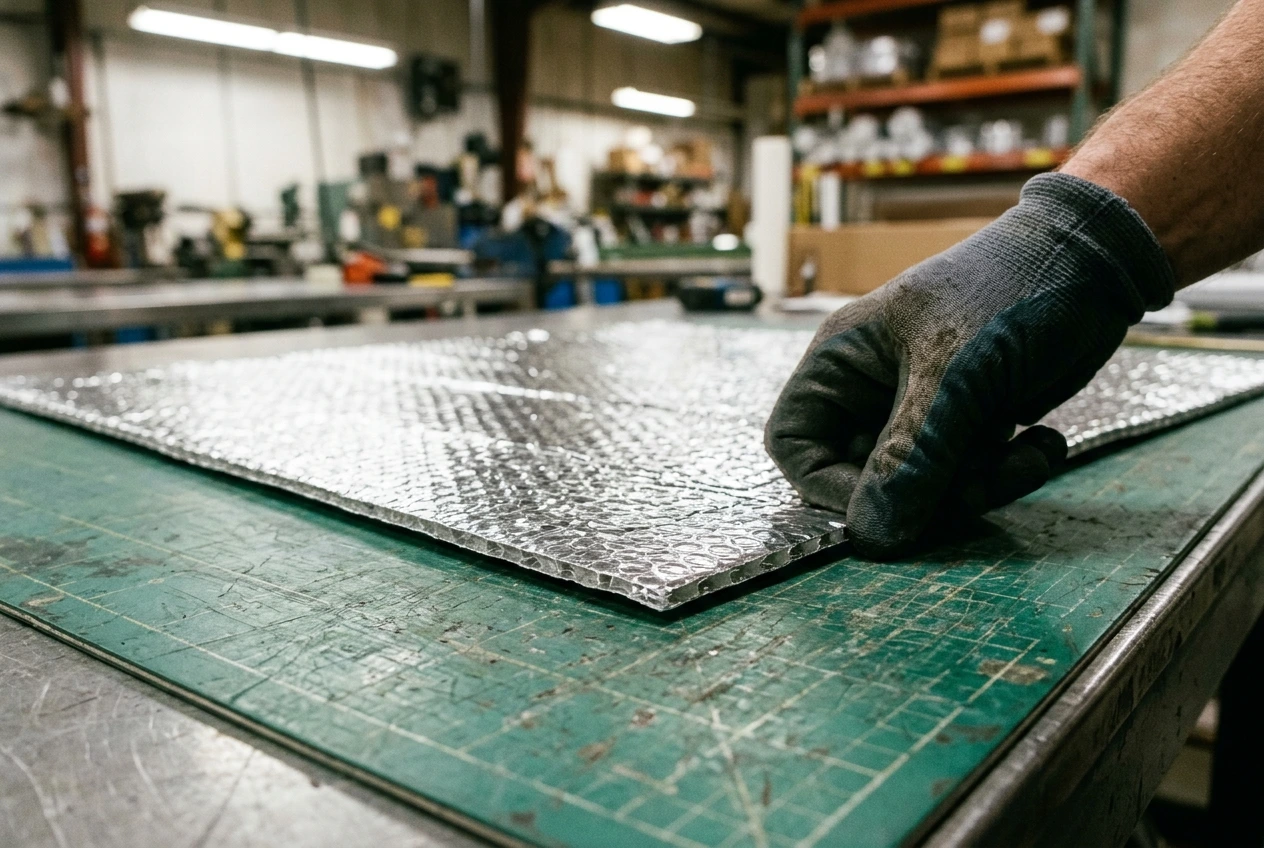
Slit material must feed the next operation with the correct face and direction. Before releasing a trial, unwind a representative output roll at the intended downstream step. Verify edge condition, width and the ability to make the required blank. A clean-looking wound roll may still conceal a layer or orientation problem.
If the finished product is a box liner, carry the material identity into its cutting, forming and assembly record. The line-width check ends at the roll; the finished-liner check follows later.
Method and sources
The machine-input categories follow primary descriptions of slitting and winding by CAMPEN and Calemard. Confirm knife geometry, web tension, and winding torque with the machine manufacturer for your specific insulation structure.