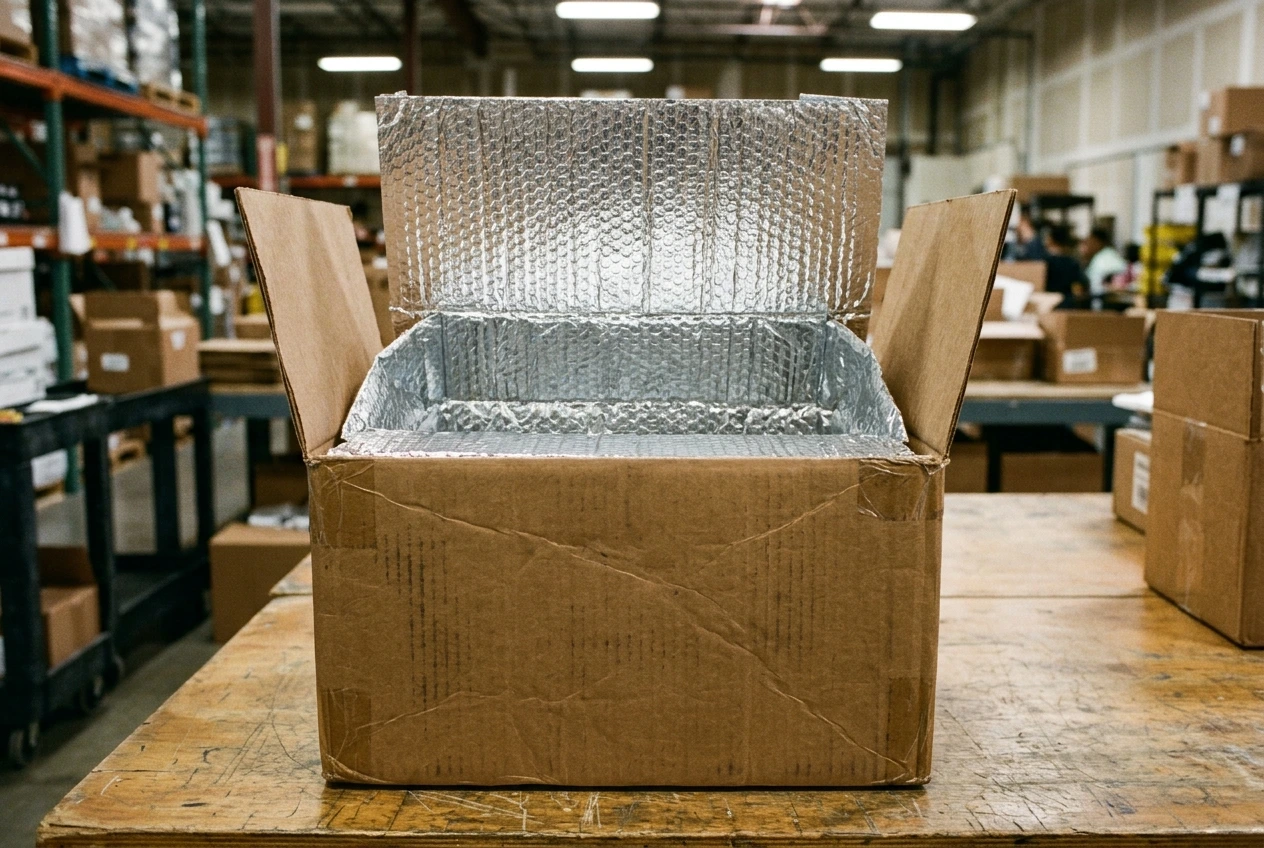
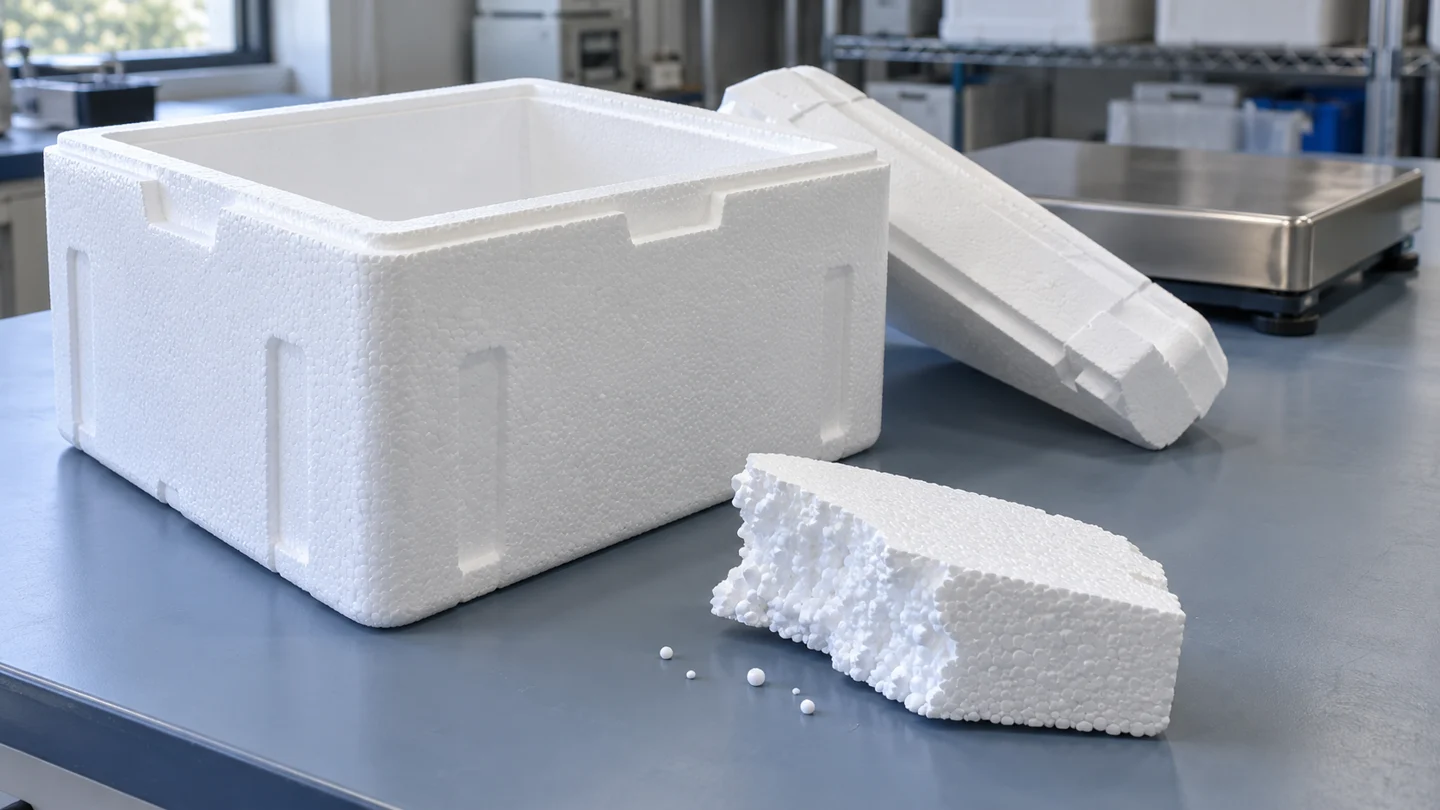
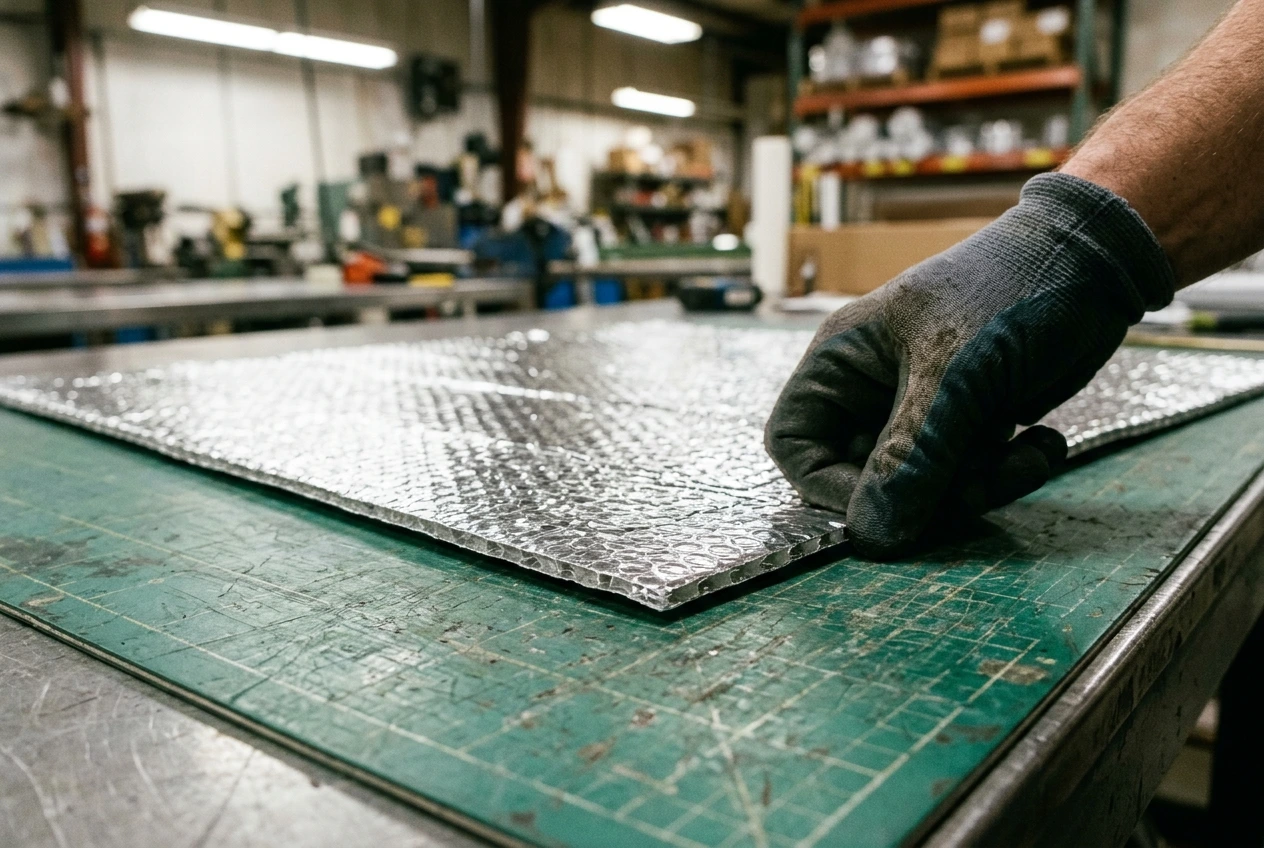
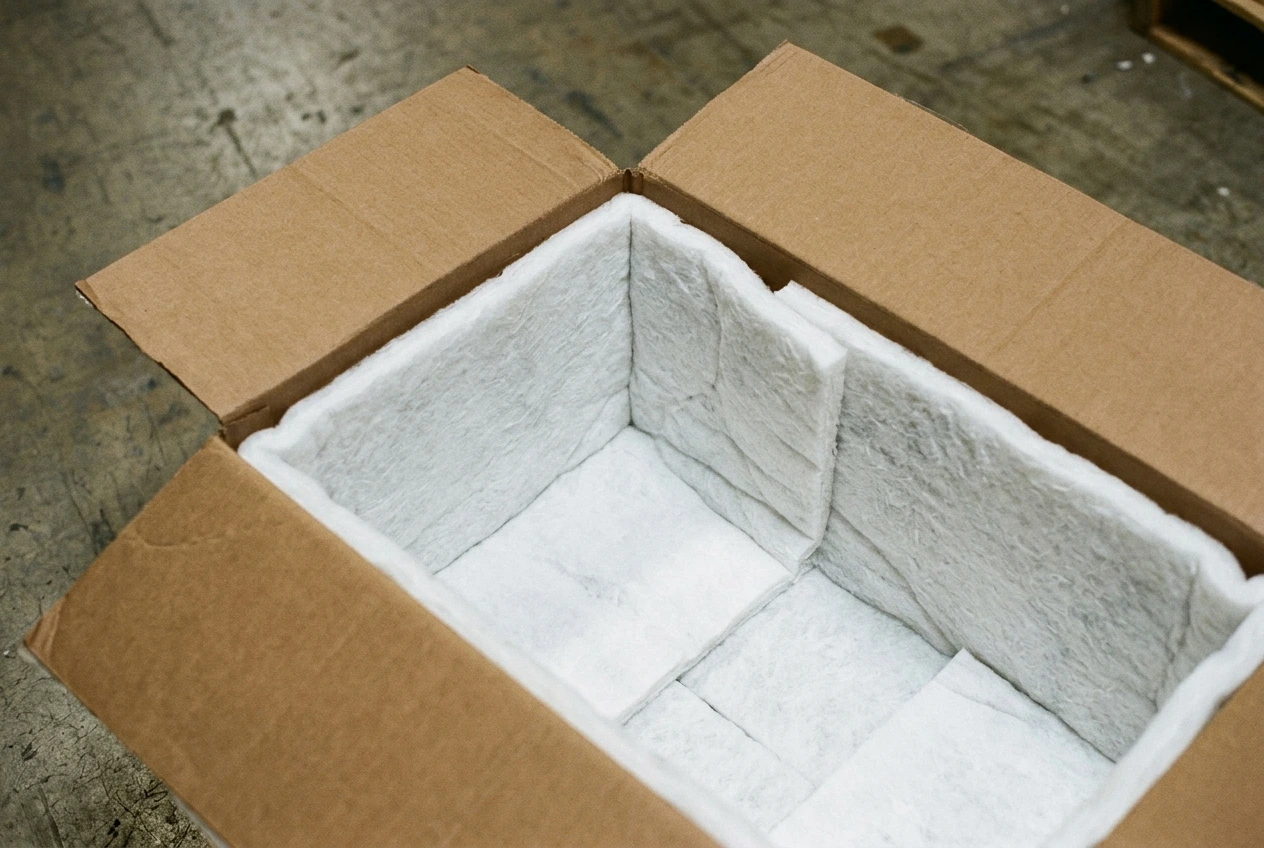
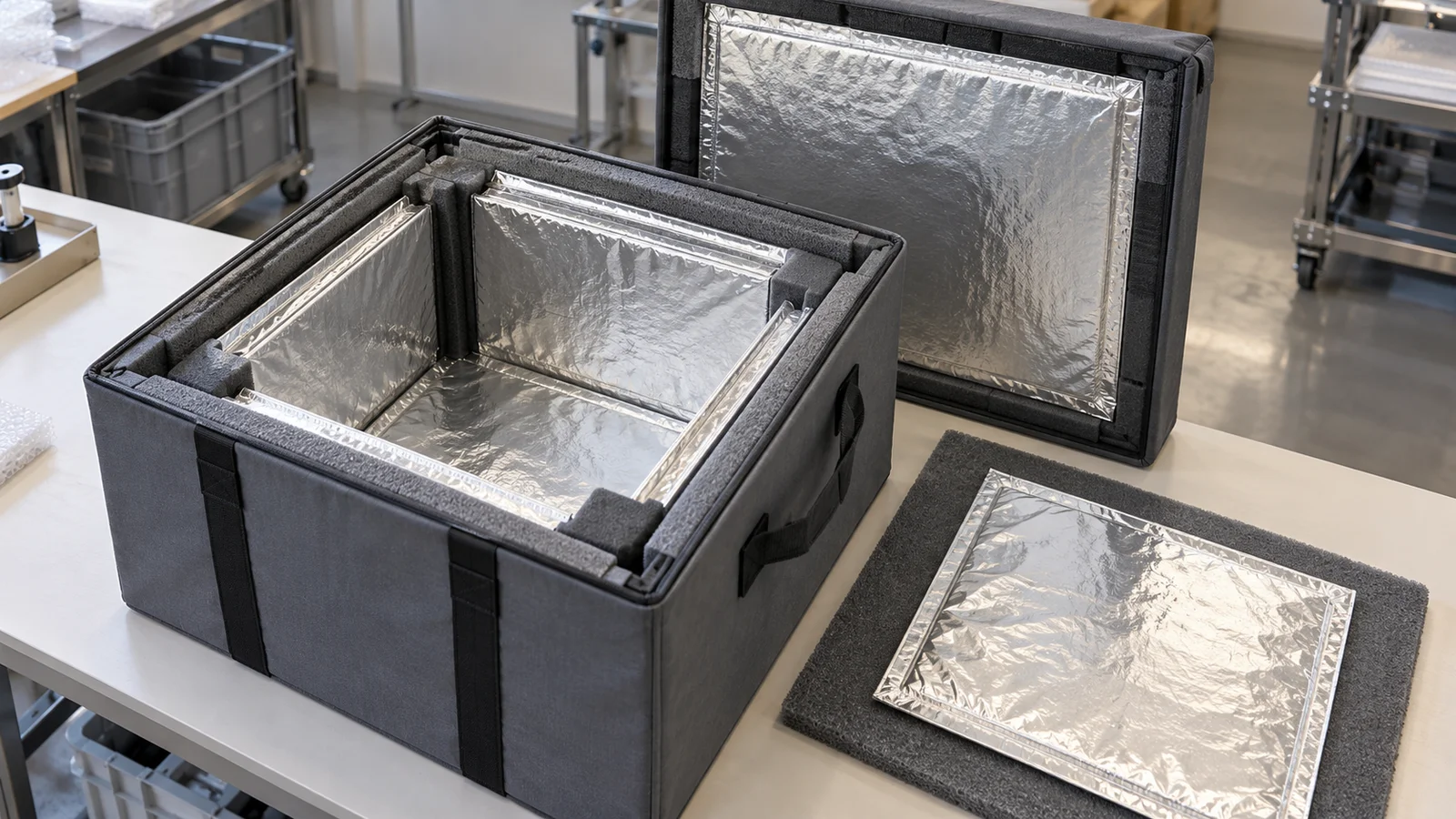
A mailer, a lined carton and a molded insulated container offer different assembly routes. Shape, protection and usable cavity matter together. A carton dimension does not tell you the payload space remaining after the liner, folds and any coolant are installed.
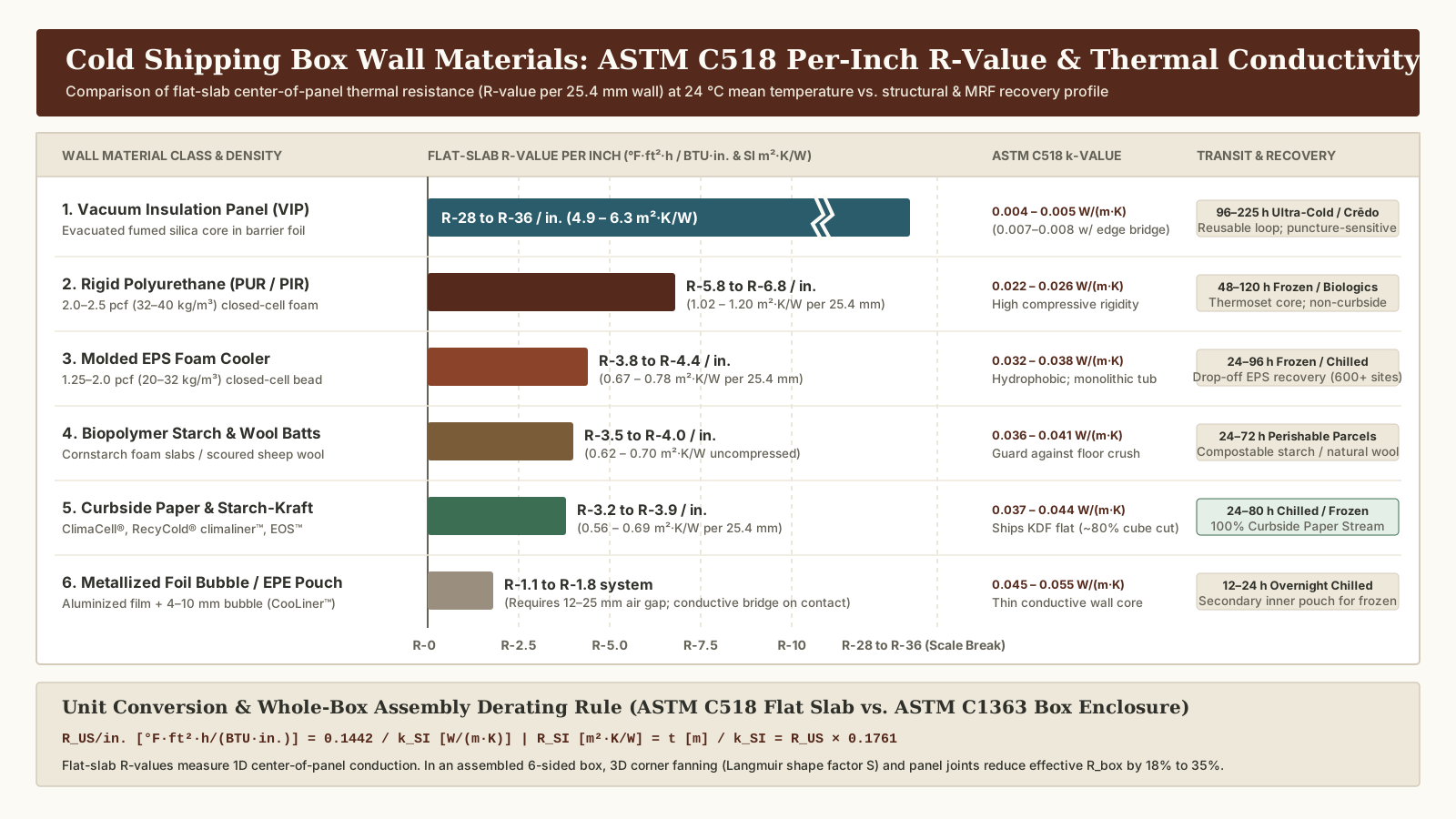
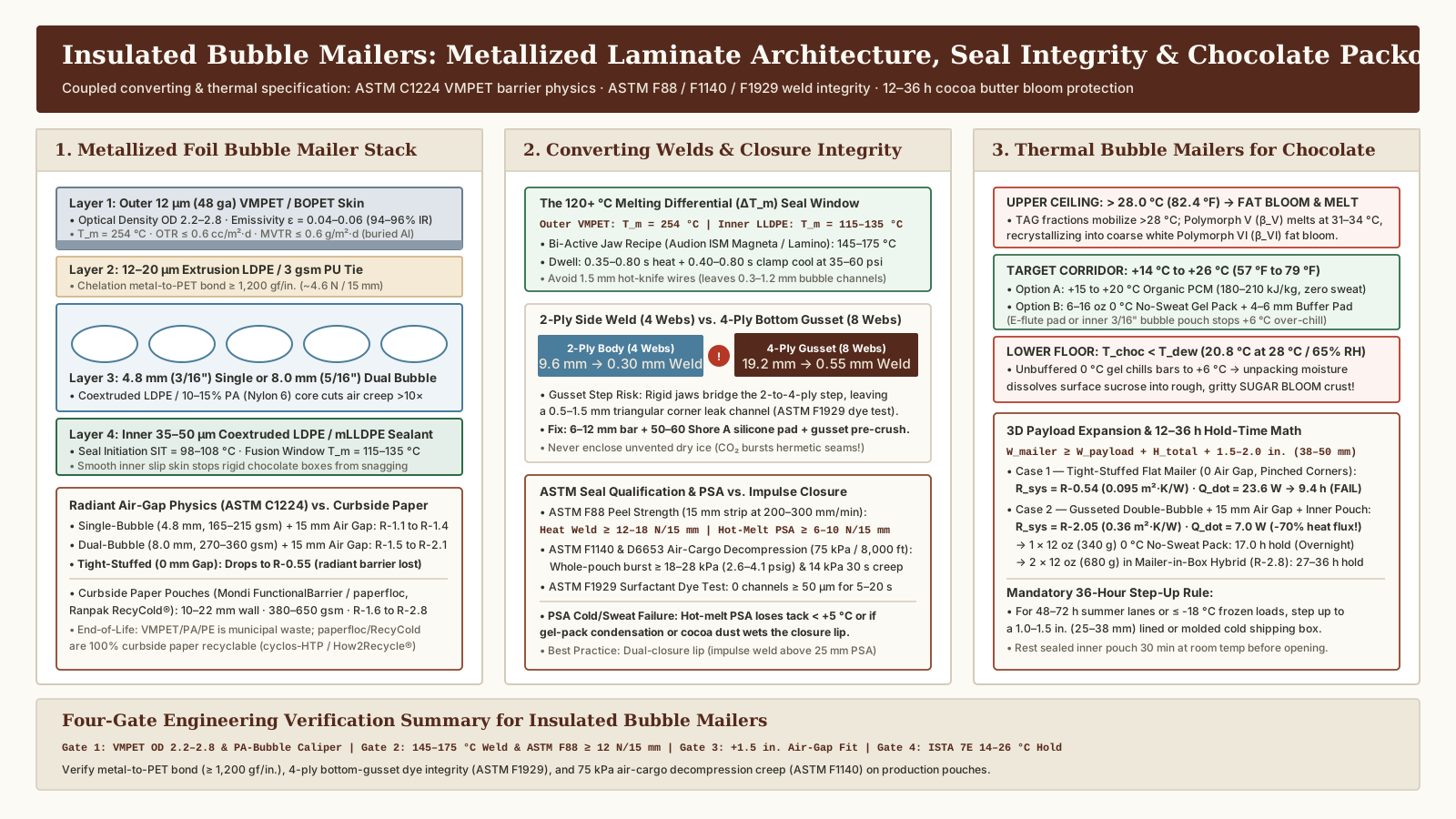
Start with the package-type guide to identify the construction. Then use the liner-dimension worksheet to record the actual carton interior, liner build and loaded closure, and pair it with our cold shipping boxes R-value and wall material comparison to evaluate 3D corner conduction derating and refrigerant mass sizing. For flexible pouch packouts, review our insulated bubble mailers laminate and seal integrity specification to match VMPET/PA-bubble layer builds, ASTM F88 side-weld parameters, and 12–36 hour chocolate phase-change sizing.
What to record before making a change
Keep the material or packout revision, the incoming component condition and the acceptance criterion in the same record. Compare an assembled sample with the approved drawing or instruction. A visual fit check helps find assembly errors; temperature performance needs evidence for the complete shipping configuration. For reusable panel-lined shippers, use the VIP panel damage and inspection guide to separate barrier damage, edge heat paths and assembly-fit problems.
Read our editorial policy for the distinction between source statements, suggested checks and tested results.