Choose insulated packaging by its construction and the work needed to make a finished enclosure. A protective mailer, a lined carton and a molded insulated container differ in how they are cut, formed, loaded and closed. Material names alone cannot tell you the required converting route or temperature performance.
Start here if you are comparing protective mailers and boxes. The table below connects the package form to its processing questions so you can align package geometry with converting and packout steps.
Separate the functions in the package
The outer package contains and supports the shipment. Insulation limits heat transfer; coolant, when used, contributes thermal capacity in the selected configuration. A cushioning layer addresses physical contact and movement. One component can contribute to several functions, but it still needs evidence for each claimed result.
Intelsius’ temperature-controlled packaging guide distinguishes outer packaging, insulation and phase-change material. Use those functions when reviewing a sample: identify what each visible layer does and which properties still need documentation.
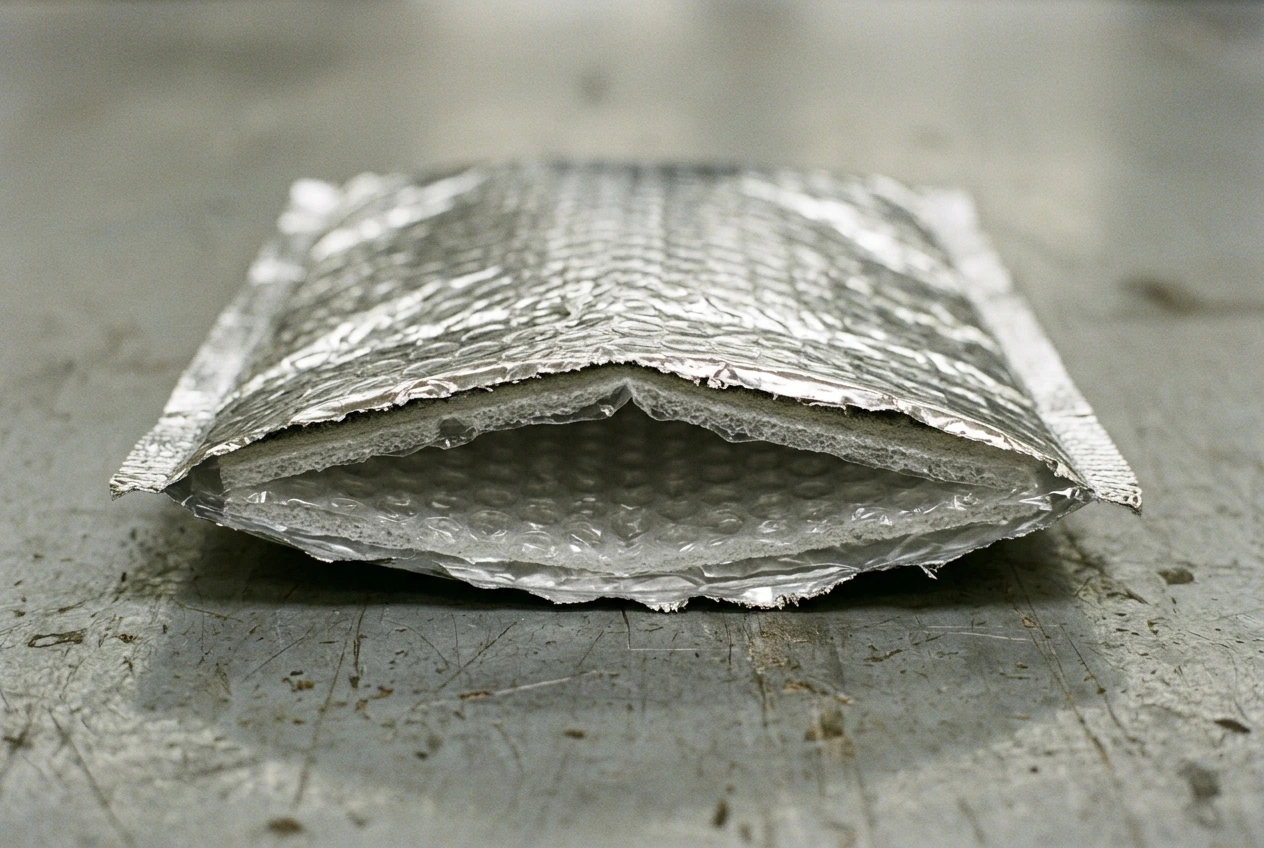
The mouth of a flexible mailer exposes the thickness and joined edges that its closure must accommodate. Its silver surface does not establish the polymer at the sealing interface, food-contact status or a temperature duration.
Connect the construction to the conversion route
| Construction | Likely processing questions to resolve | Finished-pack check | Evidence still needed |
|---|---|---|---|
| Flexible insulated mailer | How are the layers cut, joined and closed? Is the closure adhesive or heat-sealed? | Open mouth, side seams and loaded closure | Layer specification and closure instruction |
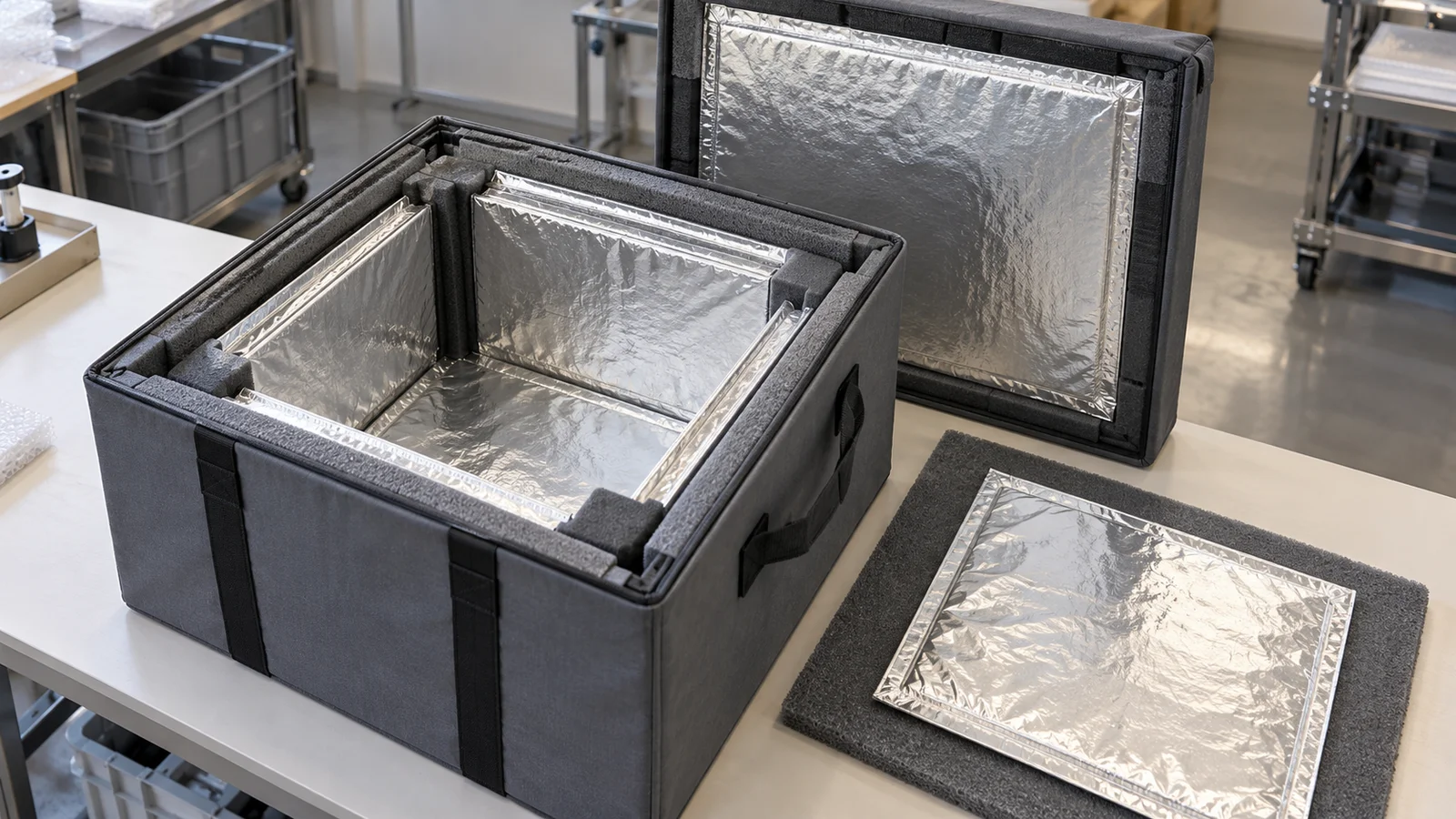
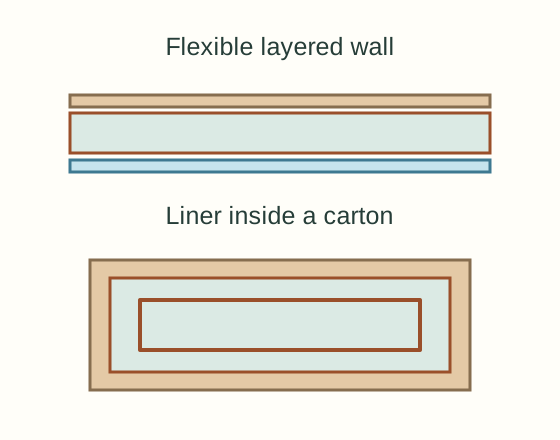
| Collapsible reflective liner inside a carton | What blank, gusset or panel geometry creates the cavity? | Bottom, corner coverage and top closure | Supplier drawing and carton fit |
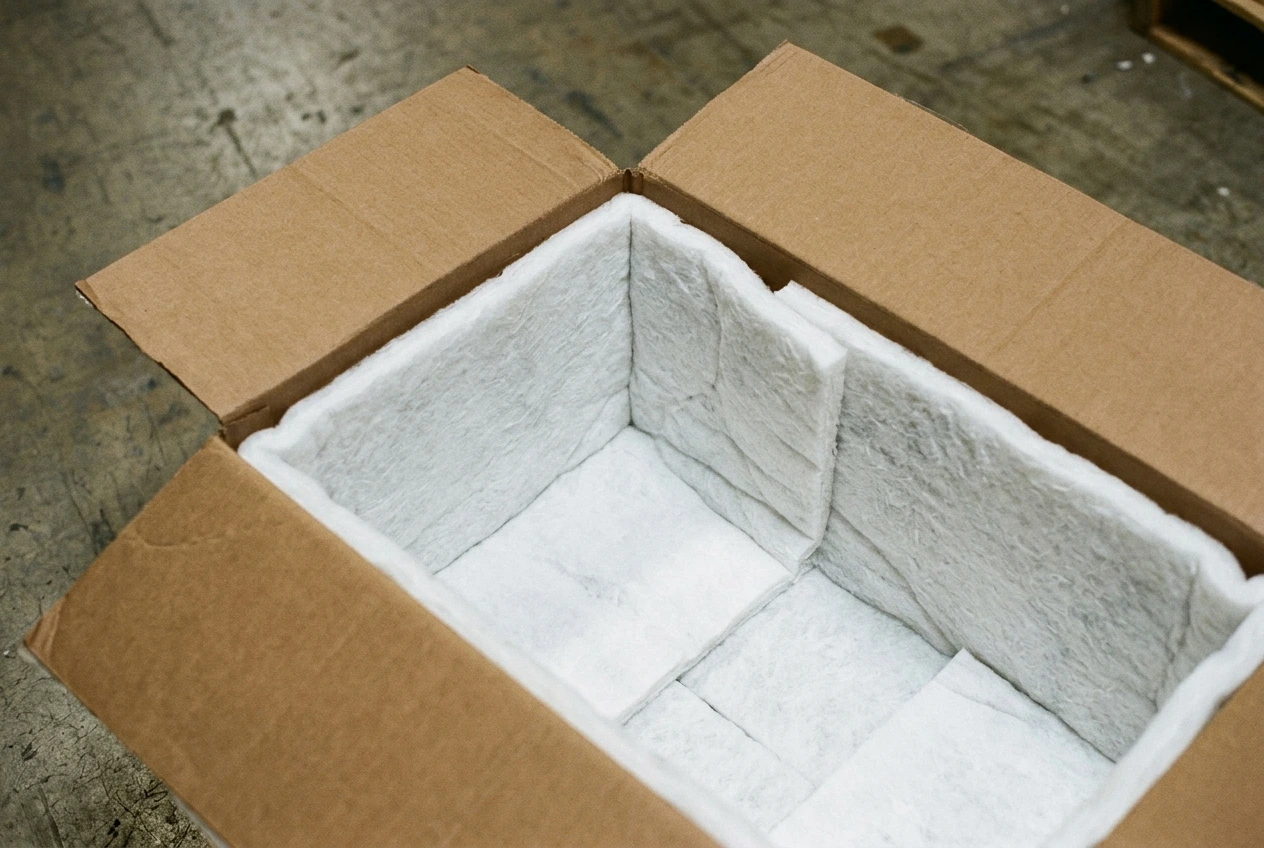
| Fibrous or foam sheet liner | How does the material retain thickness through cutting and folding? | Compression at folds and panel alignment | Material identity and permitted assembly route |
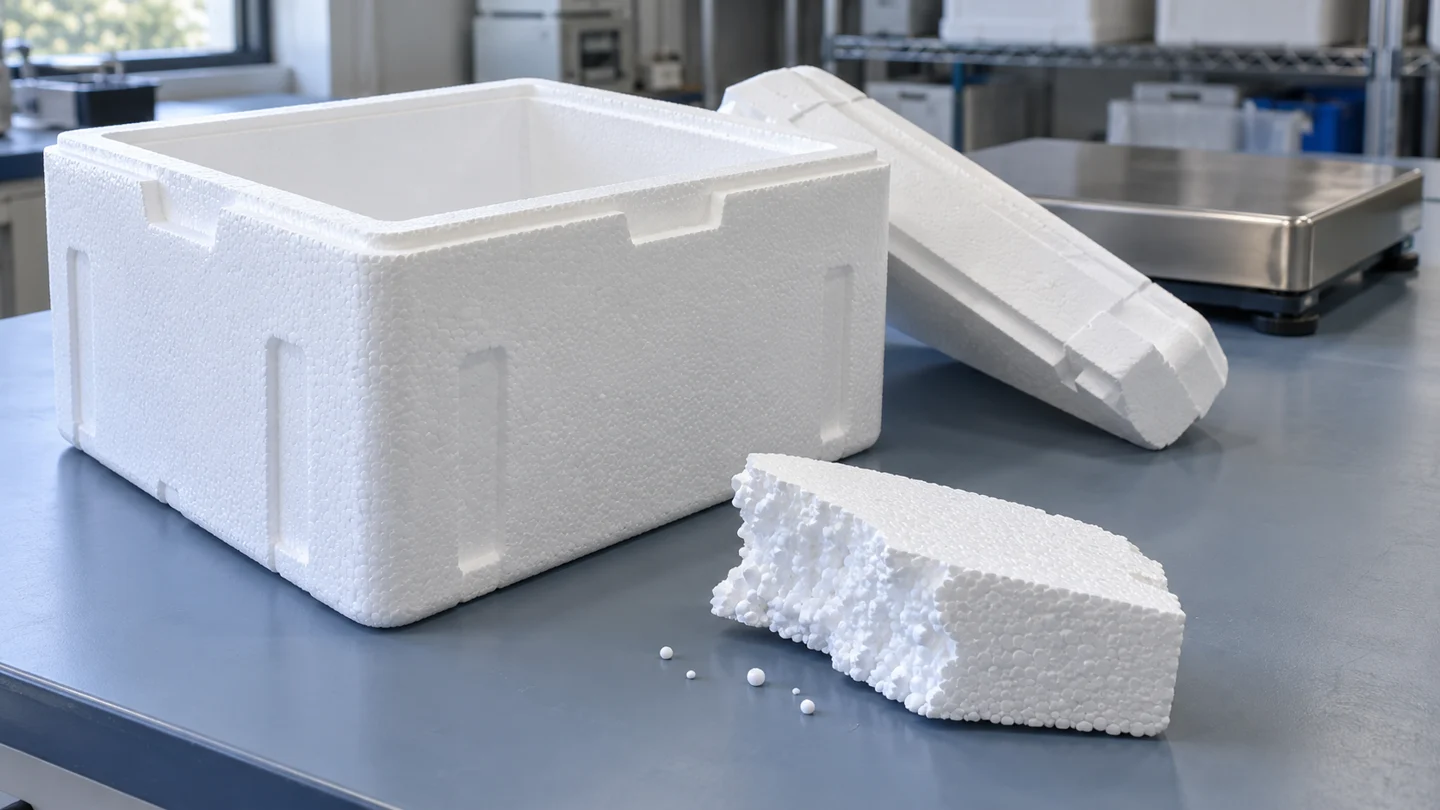
| Molded insulated container | How do the supplied base and lid fit the outer package? | Lid engagement and payload clearance | Component drawing and complete-system evidence |
| Vacuum-insulated panel assembly | How are panels protected, located and inspected? | Correct panel arrangement and enclosure fit | Handling limits and approved assembly instruction |
The processing questions are a way to prepare a review. They do not establish that a particular laminate can run on a slitter or heat sealer. Obtain samples and have the equipment supplier evaluate the actual structure.
Choose a form that can be assembled consistently
A mailer may reduce the number of components handled, yet become difficult to close around a bulky load. A lined carton may make the outer geometry easier to support while adding inner folds or panels. Inspect both the empty form and the actual loaded closure before deciding which is simpler for the station.
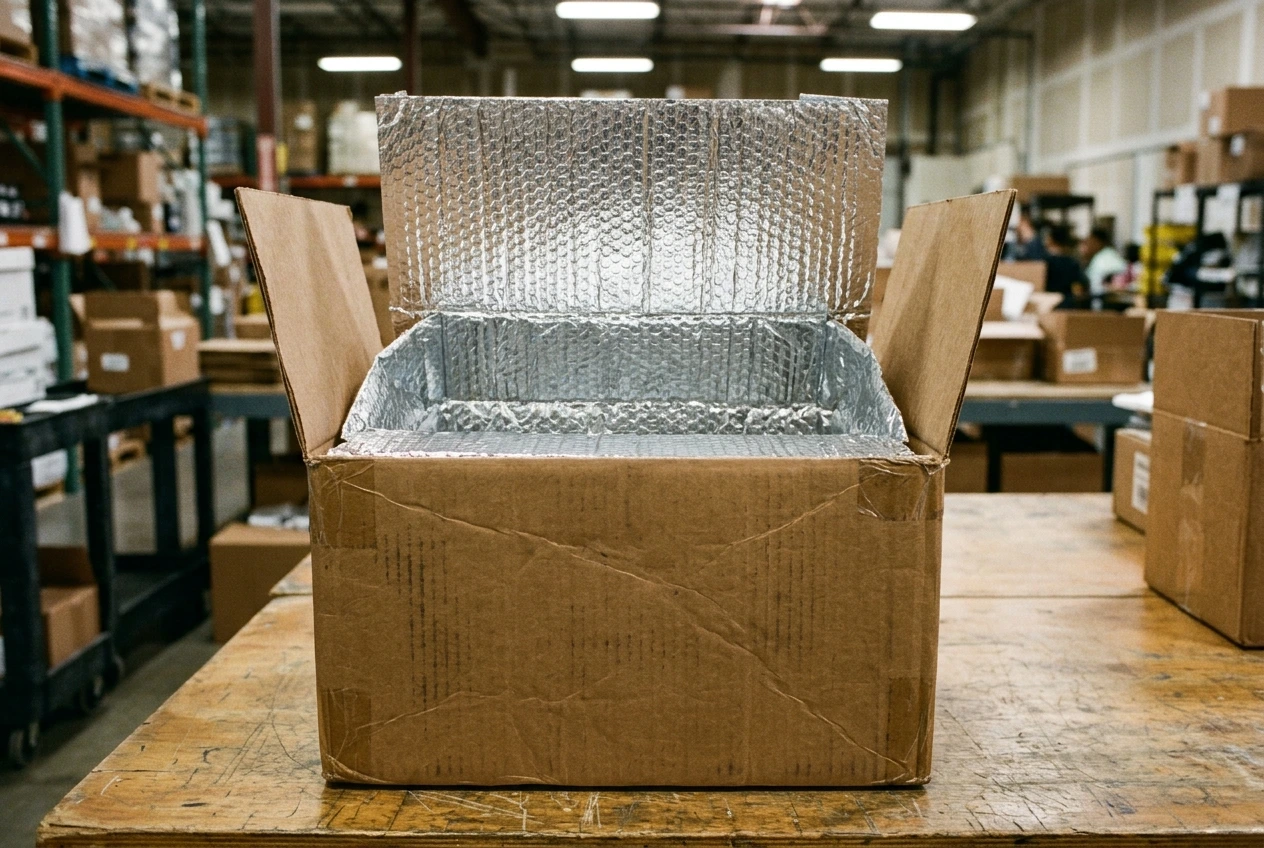
IPC’s one-piece liner documentation illustrates a collapsible reflective construction with an optional adhesive lip. It is one example of a route with opening and closure operations. It does not mean reflective liners are interchangeable or all use that closure.
Ask for separate physical and thermal evidence
For physical protection, define the payload’s vulnerable surfaces and the expected handling. For thermal suitability, obtain evidence for the complete package and its preparation, coolant, payload and exposure conditions. A material test or attractive cross section cannot establish the shipping result.
Avoid filling a comparison table with unsupported universal durations. Instead, write the exact source configuration beside any performance result you intend to use. If the supplier only provides a marketing duration, ask for the conditions before comparing it with another construction.
Take the next decision to the right worksheet
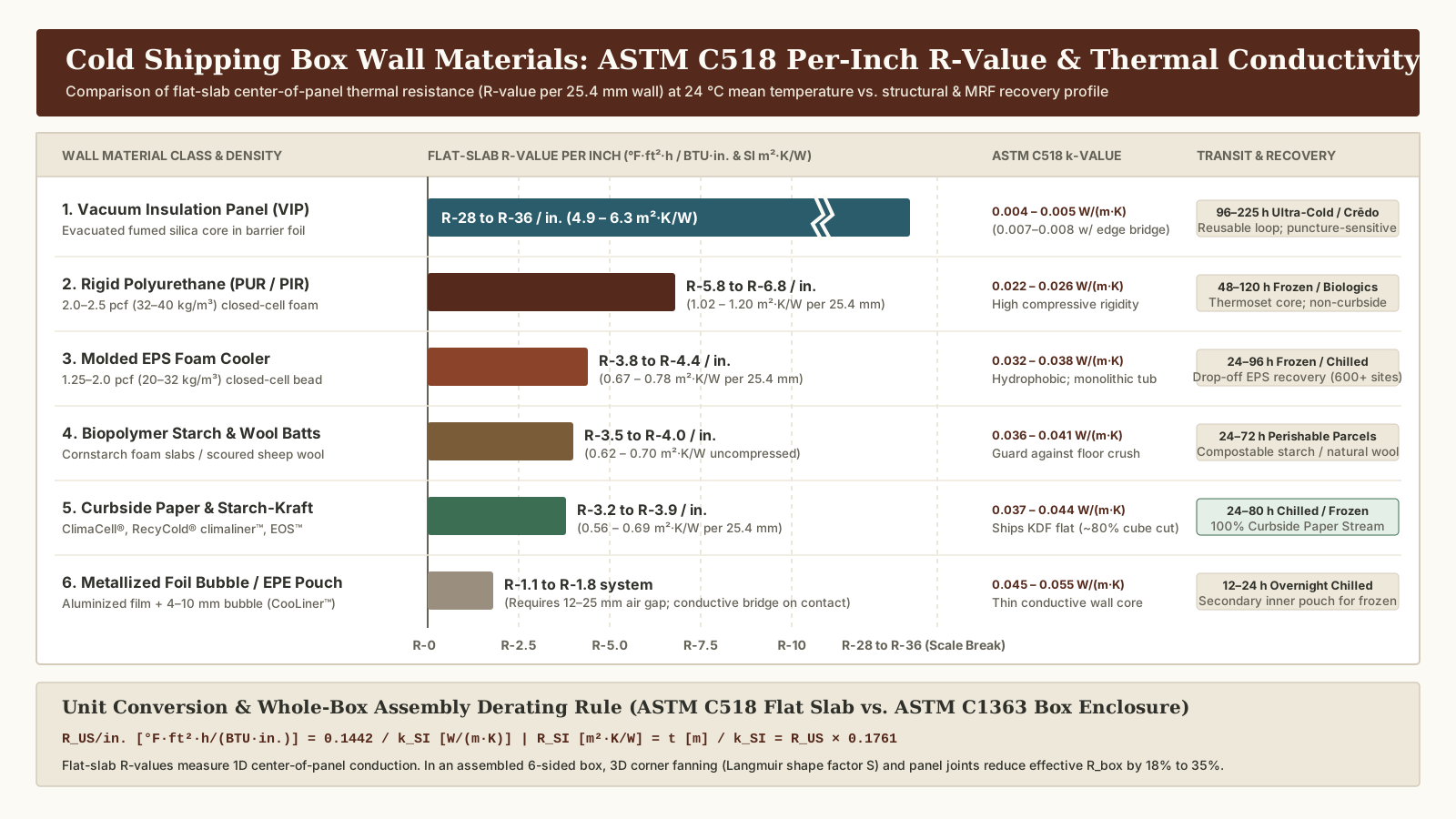
For a lined carton, use the liner dimensions and assembly inputs worksheet to record cavity and closure space, consult the cold shipping boxes R-value and wall material guide to compare EPS, PUR, VIP, fluted kraft paper, and biopolymer wall conductivity, use the gel packs for shipping food sweat-control and sizing guide to match phase-change temperature, non-woven vs. poly pouch condensation control, and refrigerant mass, and consult the shipping frozen food with dry ice sublimation sizing, liner venting, and UN 1845 guide for cryogenic -78.5 °C solid CO₂ packouts. For a mailer with a heat-sealable interface, use the sealing equipment trial checks. For material supplied in rolls, define the slitting and rewinding inputs before choosing how to make the blank.
Method and sources
This comparison draws on Intelsius’ functional description of temperature-controlled packaging and IPC’s documented liner construction. Verify thermal hold times and regulatory compliance through chamber and transit testing on the complete assembled packout.