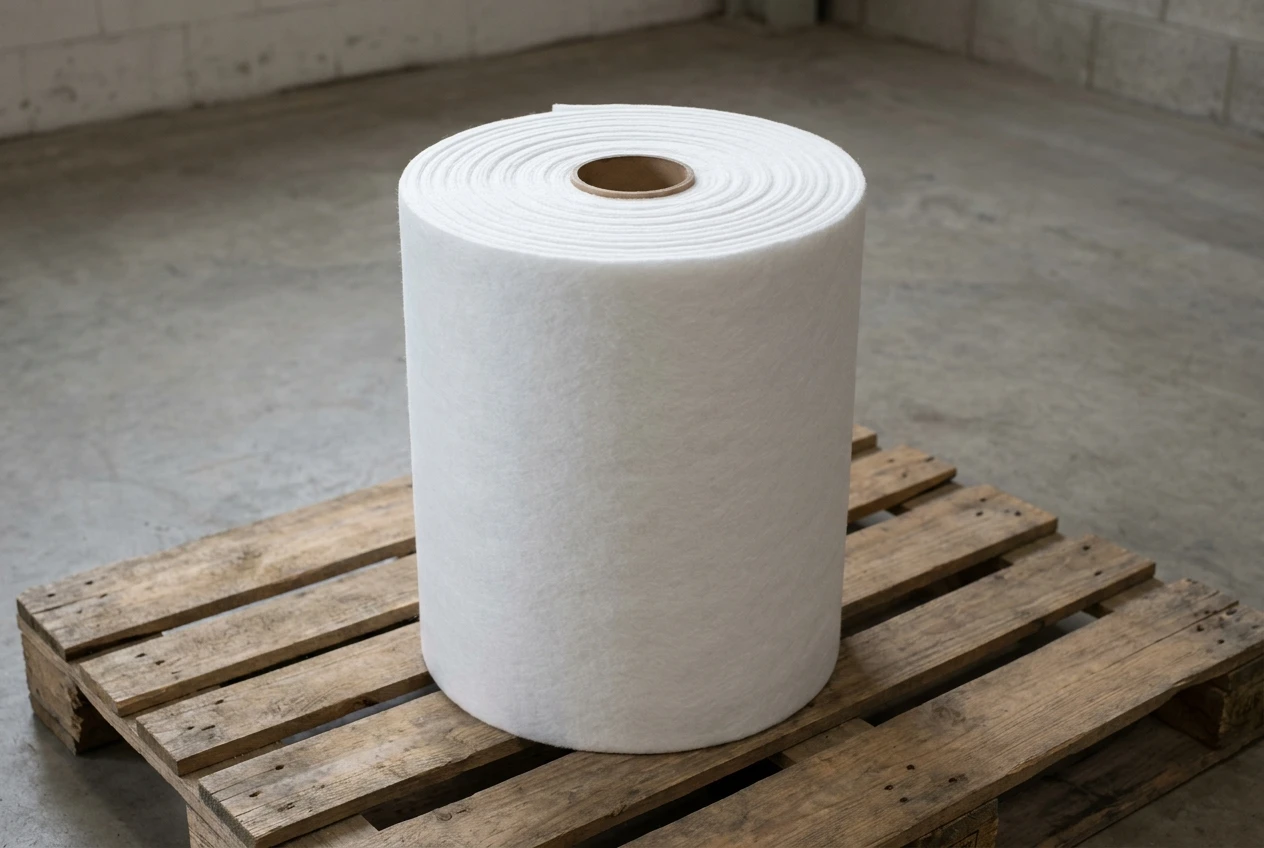
Control insulated liner converting at the handoffs between roll, blank and assembled enclosure. A correct slit width is only one input. Cut length, face orientation, folds, joining and closure determine whether the liner can be installed consistently in the intended carton.
Use this guide within liner converting when planning the full route. The slitting and rewinding input sheet covers the roll operation in more detail.
Release the construction before choosing the route
Obtain a drawing of the finished liner with material identity, face orientation, joins and closure. Record the carton reference and the assembly method. If only an outside package size is available, finish the liner fit worksheet and review the cold shipping boxes R-value and seam bridging comparison before deriving the blank.
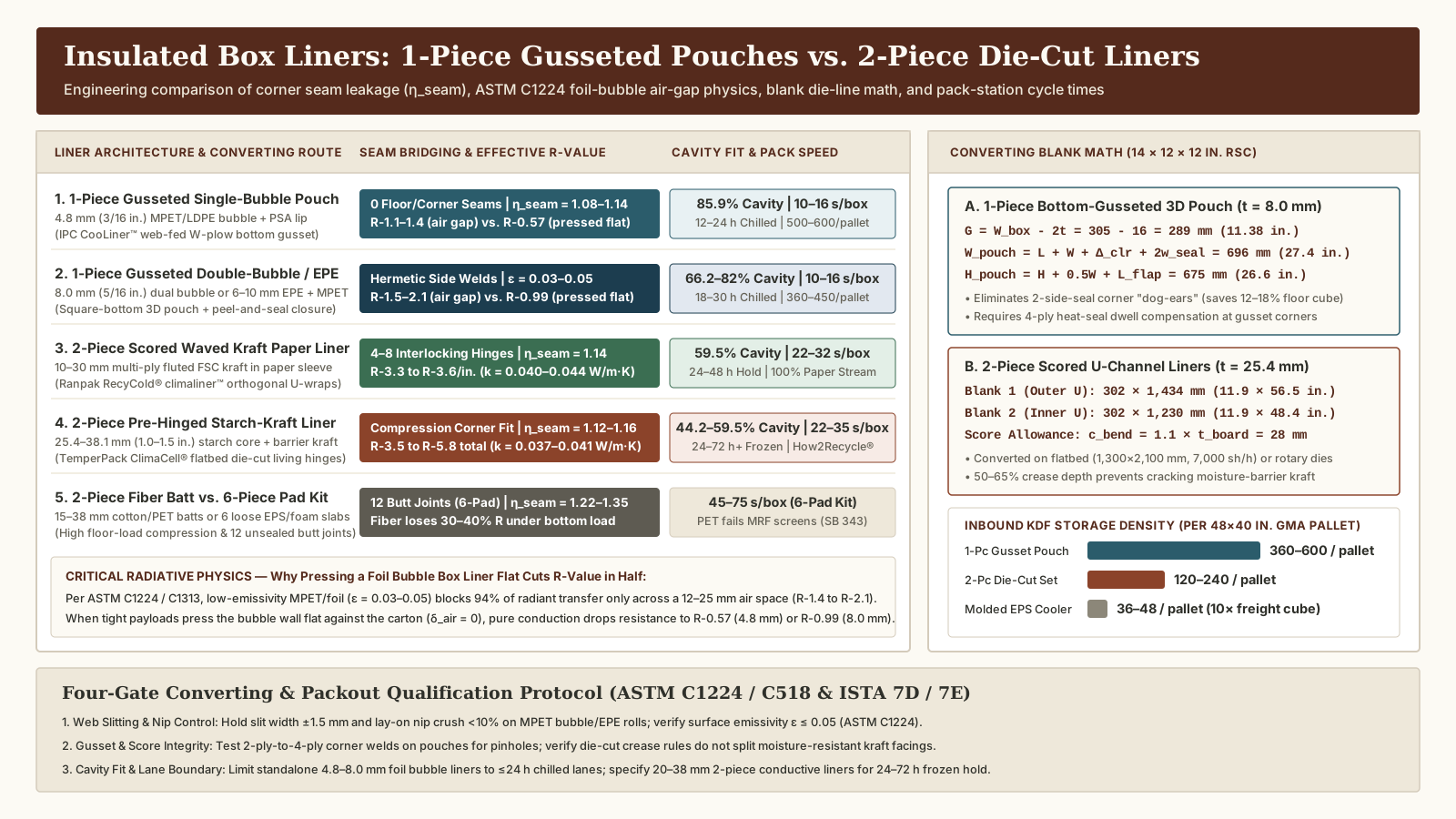
A reflective bubble liner, a fibrous pad assembly and a molded container do not share one converting route. Compare our 1-piece bottom-gusseted pouch vs. 2-piece die-cut box liner engineering guide when deriving flat blank dimensions, corner fold allowances, and ASTM C1224 air-gap clearance. Use the actual supplier construction to decide whether the process needs slitting, cross-cutting, separate panels, folding or joining. An editorial route sketch cannot substitute for that drawing.
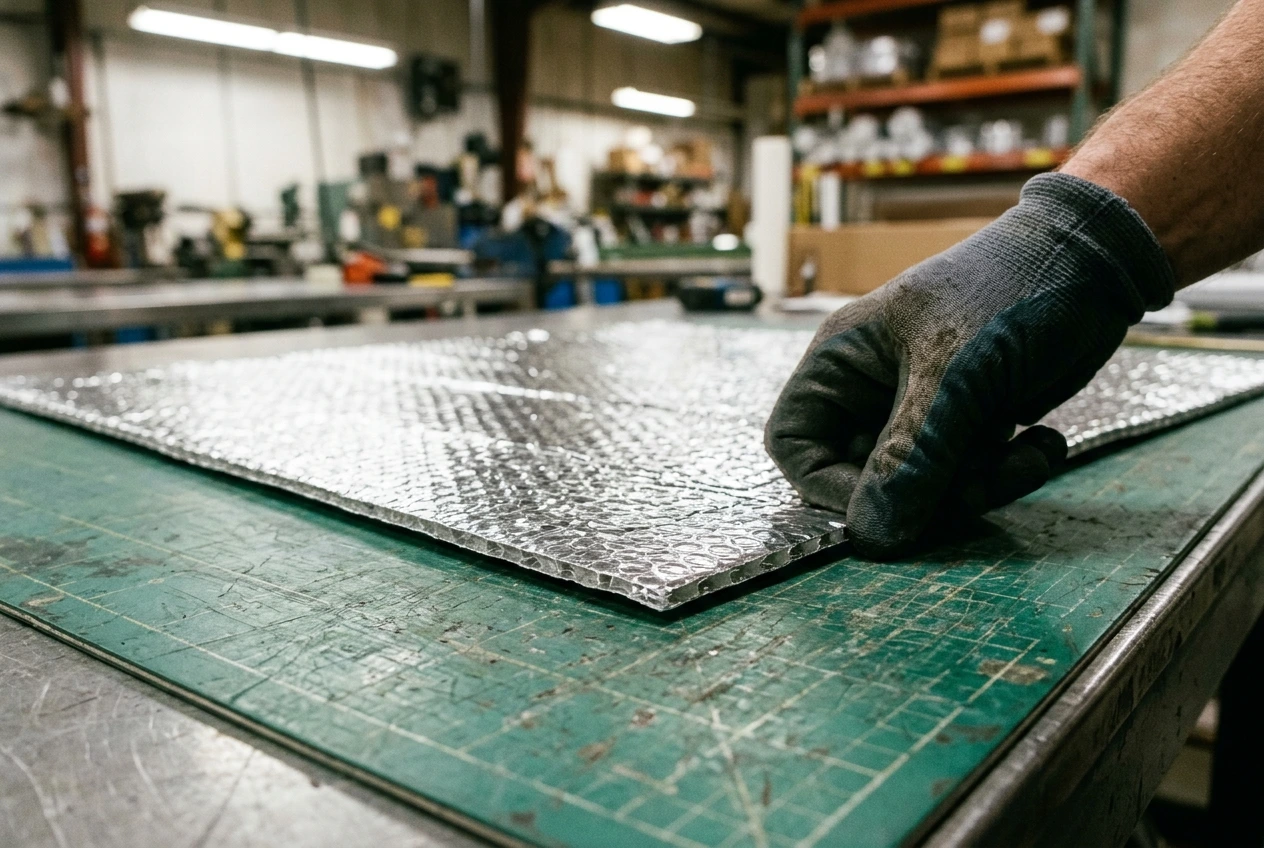
The cut edge shows both the sheet boundary and its layered build. Inspect it before forming, when tearing, delamination or the wrong face direction may be easier to identify than inside the carton.
Use a traveler that follows the material
| Handoff | Record to carry forward | Suggested acceptance check | Hold condition |
|---|---|---|---|
| Supplied roll to width conversion | Material lot, orientation, slit pattern | Width and edge match the drawing | Unknown structure or damaged input |
| Roll to cut blank | Finished width, cut length and face direction | Blank geometry and clean edges | Wrong orientation or cut location |
| Blank to formed liner | Fold locations, overlap or panel arrangement | Corners and bottom form as drawn | Gaps, tears or excessive buildup |
| Forming to joining | Specified adhesive, heat-seal or other interface | Join location and agreed test result | Unapproved closure method or discontinuity |
| Finished liner to carton | Carton identity and assembly instruction | Liner seats and closes with the approved load | Interference or closure obstruction |
| Sample to released production | Drawing revision and retained sample | Recorded checks cover the actual route | A change has no accepted reference |
The traveler is a suggested record structure. Set the actual dimensions, tolerances and test methods with the packaging owner before using it for release.
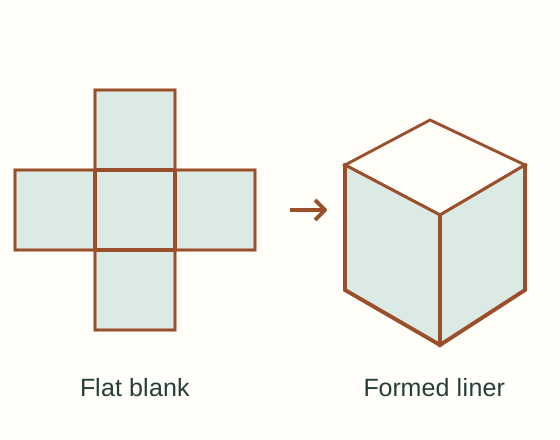
Inspect the fold as a material change
A fold changes local thickness and may concentrate handling stress. Check whether the specified material forms the corner without tearing, crushing cells or lifting an attached layer. If the blank springs back or needs excessive force, record the geometry and material condition rather than adding a crease by habit.
Where the route joins separate layers or panels, inspect the joint under the agreed method. Do not assume a reflective surface can be heat-sealed. The bag sealer trial guide explains how to identify the actual joining surfaces.
Verify the enclosure in the carton
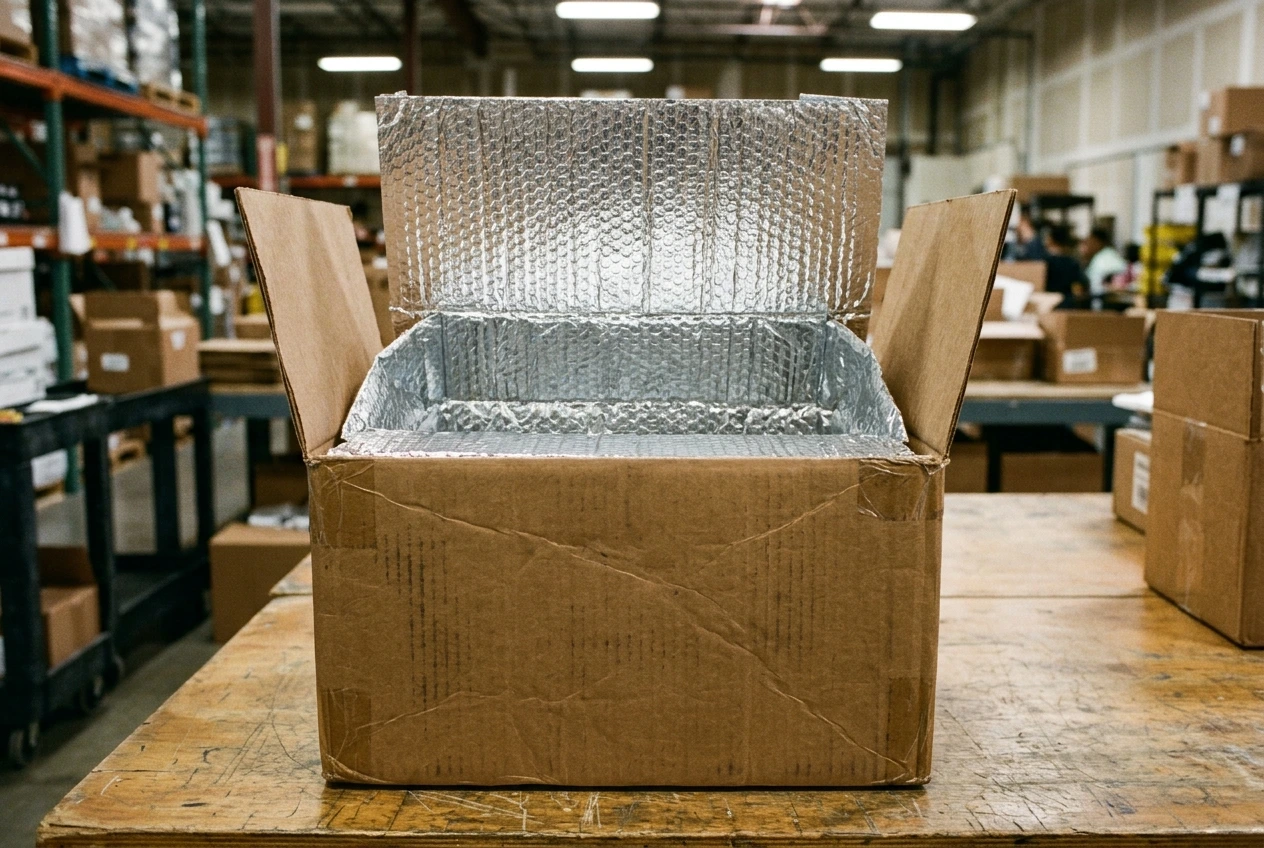
Use the intended carton and a representative complete load. Inspect bottom coverage, corners and top closure in assembly order. A liner that looks neat while empty can pull open when the payload enters or prevent the carton from closing at the required height.
IPC’s liner documentation describes a specific collapsible construction and closure options, showing why installation belongs in the evaluation. For your design, retain the drawing and accepted loaded sample together. A change to material thickness, carton size or closure needs review at the affected handoffs rather than automatic acceptance as an equivalent.
Close the trial with a traceable sample set
Keep one identified input sample, a cut blank and a finished liner from the same trial where practical. Associate each with the material lot, drawing revision and measured results. This makes it possible to trace a poor corner back to the blank or material instead of adjusting several operations at once.
Review how the accepted liner feeds the packing station. Count rejected blanks and assembly interruptions using your own observations if estimating capacity or yield. Base capacity and yield models on observed line speed, trim allowance, and thermal qualification data for the specific packout.
Method and sources
Primary documentation from CAMPEN and Calemard supports separating web conversion from downstream forming. IPC provides an example of a finished liner’s installation and closure requirements. Confirm production die lines, slitting setups, and thermal qualification protocols with the material converter and packaging engineer.